
Hyderabad, India
Mar 10–14, 2027
Grinding Technology Seminar
Explore cutting-edge grinding technologies and connect with industry leaders.
Innovative Solutions
Discover the future of grinding technology at our seminar.
Join us for insightful discussions on advancements in grinding technology.


Grinding Technology Seminar – Operation & Maintenance
The Grinding Technology Seminar provides a comprehensive, hands‑on learning experience focused on the operation, maintenance, and optimization of modern cement grinding systems. Participants gain a deep understanding of crushing and comminution fundamentals, system design principles, equipment performance, and cement quality control. The program covers ball mills, roller presses, and vertical roller mills (VRMs), offering practical methods to evaluate, troubleshoot, and optimize grinding operations.
This seminar is ideal for engineers, operators, maintenance teams, and technical managers seeking to improve reliability, reduce downtime, and enhance overall grinding efficiency.
A New Level of Competence
This seminar delivers a focused and in‑depth exploration of the key challenges in cement grinding technology. By addressing process fundamentals, operational practices, and maintenance strategies, participants gain the skills needed to optimize ball mills, roller presses, and vertical roller mills for higher efficiency and reliability.


Seminar Highlights
- Comprehensive Grinding Technology Coverage Learn the complete grinding process from crushing and comminution fundamentals to advanced mill operation and optimization.
- Ball Mill, Roller Press & VRM Mastery Deep technical sessions dedicated to the operation, performance, troubleshooting, and optimization of ball mills, roller presses, and vertical roller mills.
- System Design & Process Efficiency Understand how circuit design, separators, ventilation, gas flow, and heat balance influence output, energy consumption, and cement quality.
- Cement Quality & Performance Control Strengthen your ability to manage Blaine, residue, PSD, and separator efficiency to achieve consistent, high‑quality cement production.
- Hands‑On Diagnostic & Optimization Tools Learn practical methods for sampling, mass balancing, circuit evaluation, and identifying bottlenecks in grinding systems.
- Maintenance & Reliability Excellence Gain proven strategies for preventive and predictive maintenance, condition monitoring, wear management, and shutdown planning.
- Real Case Studies & Practical Exercises Work through real plant scenarios to build confidence in solving grinding problems and improving system stability.
- Actionable Improvement Plans Leave with a clear roadmap to enhance equipment reliability, reduce downtime, and optimize grinding performance in your plant.
Grinding Technology
Key Learning Areas
Crushing & Comminution Fundamentals
Principles of Size Reduction
Understand the scientific and mechanical principles behind reducing raw material size. Participants learn how particle breakage occurs, how energy is applied, and how size reduction efficiency impacts downstream grinding performance.
Relationship between feed size, product size, and energy consumption
Breakage distribution and fragmentation behavior
How size reduction influences mill throughput and kWh/t
Impact, Compression, and Attrition Mechanisms
Explore the four primary breakage mechanisms used in cement manufacturing and how each applies to different crusher types.
Impact: High‑velocity collisions used in hammer and impact crushers
Compression: Slow, forceful squeezing used in jaw and cone crushers
Attrition: Rubbing and abrasion common in grinding stages
Shear: Material slicing under parallel forces Participants learn how each mechanism affects particle shape, fines generation, and overall grinding efficiency.
Material Characteristics and Grindability
Gain a deep understanding of how raw material properties influence crushing performance and mill behavior.
Hardness, abrasiveness, moisture content, and mineral composition
Bond Work Index and grindability testing
How material variability affects crusher selection and mill performance
Strategies for handling difficult materials (wet, sticky, hard, abrasive)
Pre‑Crushing Systems and Their Influence on Mill Performance
Learn how proper pre‑crushing dramatically improves grinding efficiency and reduces energy consumption.
Role of primary and secondary crushers in preparing mill feed
Achieving optimal feed size for ball mills, roller presses, and VRMs
How pre‑crushing reduces circulating loads and improves separator efficiency
Case studies showing kWh/t reduction through improved pre‑crushing
Best practices for integrating pre‑crushing into modern grinding circuits


Grinding Technology & System Design
Mill Types and Grinding Mechanisms
Gain a clear understanding of how different grinding technologies work and how their mechanisms influence efficiency, energy consumption, and product quality.
Ball Mills: Impact and attrition grinding; charge behavior; liner design; media motion
Roller Presses: Interparticle compression; high‑pressure grinding; micro‑crack formation
Vertical Roller Mills (VRMs): Bed grinding; hydraulic pressure; material stabilizing zones
Comparative analysis of grinding efficiency, energy use, and maintenance requirements
How mill selection affects circuit layout and process stability
Closed Circuit vs. Open Circuit Systems
Learn how circuit configuration impacts product fineness, separator load, energy consumption, and overall system performance.
Open Circuit: Simple layout; limited control over product fineness; higher variability
Closed Circuit: Separator‑controlled PSD; stable product quality; reduced over‑grinding
Circulating load behavior and its impact on mill efficiency
How circuit selection influences Blaine, residue, and cement quality consistency
Best practices for achieving stable closed‑circuit operation
Separator Design and Efficiency
Understand how separator performance determines cement quality, mill output, and energy consumption.
Separator types: static, dynamic, high‑efficiency
Key components: rotor, guide vanes, cage, reject cone
Cut size, sharpness of separation, and PSD control
How separator efficiency affects circulating load and mill ventilation
Troubleshooting common separator problems (coarse product, high residue, low Blaine)
Process Flow Design for Ball Mills, Roller Presses, and VRMs
Explore how proper process flow design ensures stable operation, optimal drying, and efficient classification.
Ball mill circuits: pre‑crushing, drying chambers, intermediate diaphragms, ventilation paths
Roller press circuits: static vs. dynamic separators, V‑separator, hybrid layouts
VRM circuits: gas flow, temperature control, internal/external circulation, drying capacity
Material flow balance and its impact on process stability
Case studies showing how poor flow design reduces output and increases kWh/t
Energy Efficiency and System Layout Considerations
Learn how to design grinding systems that minimize energy consumption while maximizing throughput.
Specific power consumption drivers for each mill type
Influence of ventilation, gas flow, and separator efficiency on energy use
Heat balance optimization for VRMs and ball mills
Layout considerations: pre‑crushing, roller press integration, high‑efficiency separators
Strategies for reducing kWh/t through circuit redesign and process optimization
Equipment Performance & Cement Quality
Factors Influencing Mill Output and Specific Power Consumption
Understand the operational, mechanical, and process variables that directly affect grinding efficiency.
Feed size, moisture, and material grindability
Mill internals: liners, diaphragms, media size distribution
Separator loading and circulating load behavior
Ventilation, gas flow, and drying capacity
Drive system performance and mechanical losses Participants learn how each factor contributes to output limitations and increased kWh/t.
Separator Performance and Particle Size Distribution (PSD)
Explore how separator efficiency determines cement quality, mill performance, and energy use.
Cut size, sharpness of separation, and classification efficiency
Influence of rotor speed, cage design, and guide vanes
Relationship between separator performance and circulating load
PSD control for different cement types
Diagnosing separator problems through PSD curves A strong separator ensures stable fineness, lower residue, and improved mill throughput.
Blaine, Residue, and Cement Quality Relationships
Learn how fineness parameters interact with cement performance and mill behavior.
Blaine vs. residue: strengths and limitations
PSD influence on strength development, water demand, and setting time
How over‑grinding increases energy consumption without improving quality
Balancing fineness targets with mill capacity Participants understand how to achieve consistent cement quality while minimizing energy use.
Process Stability and Control Strategies
Master the control room techniques that ensure stable grinding operation.
Key control variables: feed rate, gas flow, pressure, temperature
Strategies for stabilizing ball mills, roller presses, and VRMs
Handling fluctuations in feed moisture and grindability
Using trends and alarms for proactive control
Avoiding common instability triggers (high vibration, overload, low drying capacity) Stable operation leads to higher output, lower energy consumption, and better cement quality.
Heat Balance and Gas Flow Fundamentals
Understand the thermal and aerodynamic principles that govern grinding system performance.
Heat balance calculations for ball mills and VRMs
Drying requirements for raw materials and additives
Gas flow paths and their influence on separator efficiency
Temperature control for gypsum dehydration and cement quality
Identifying heat balance bottlenecks that reduce mill output
Participants learn how to maintain optimal thermal conditions for efficient grinding.


Ball Mills – Operation & Maintenance
Mill Internals: Liners, Diaphragms, Media
Understand how liners, diaphragms, and grinding media influence mill efficiency.
Liner design affects charge motion, impact zones, and wear patterns
Diaphragm open area and slot design control material flow and chamber balance
Media size distribution and filling degree determine grinding efficiency and energy use
Charge Behavior and Grinding Efficiency
Learn how charge motion (cascading, cataracting) impacts grinding performance.
Effects of mill speed, filling level, and liner profile
Identifying inefficient charge behavior through power, sound, and vibration
Adjustments that improve fineness, output, and kWh/t
Drive System Reliability (Girth Gear, Pinion, Bearings)
Maintain the critical components that keep the mill running.
Alignment, contact patterns, and wear monitoring for girth gear and pinion
Bearing lubrication, cooling, and early fault detection
Gearbox and motor reliability considerations
Lubrication Excellence
Improve reliability through proper lubrication practices.
Lubrication systems for trunnion bearings and girth gear
Oil analysis for contamination and wear metals
Common lubrication failures and corrective actions
Common Failure Modes and Troubleshooting
Identify and resolve typical ball mill problems.
Vibration, poor ventilation, high temperature
Diaphragm blockages, media segregation, coarse product
Misalignment, abnormal gear wear, unstable fineness
Practical Methods to Increase Output and Reduce kWh/t
Apply proven techniques to boost performance.
Optimize media grading and filling degree
Improve liner design and ventilation
Enhance separator efficiency and reduce circulating load
Stabilize feed conditions and improve pre‑crushing
Roller Presses – Operation & Optimization
Roller Press Grinding Principles
Understand how interparticle compression creates efficient size reduction.
High‑pressure grinding generates micro‑cracks that improve downstream grinding
Material bed formation and its influence on throughput
Key operating variables: pressure, roll speed, feed stability, and nip angle
How roller press performance affects ball mill or separator efficiency in hybrid circuits
Hydraulic System Operation and Maintenance
Learn how the hydraulic system controls grinding pressure and machine stability.
Hydraulic accumulators, pumps, and control valves
Pressure setting, monitoring, and adjustment
Common hydraulic issues: leaks, pressure drops, overheating
Preventive maintenance routines to ensure stable grinding force
Roller Surface Wear and Refurbishment
Manage wear to maintain grinding efficiency and reduce downtime.
Types of roller surfaces: studded, hard‑faced, welded
Wear patterns and their impact on pressure distribution
Refurbishment options: re‑welding, re‑surfacing, replacement
How worn rollers increase energy consumption and reduce throughput
Separator Interaction and Circuit Stability
Understand how the roller press interacts with the separator and overall circuit.
Importance of stable feed to the separator
V‑separator vs. dynamic separator behavior
Circulating load management for hybrid RP + ball mill circuits
How separator efficiency influences roller press performance and product quality
Common Operational Issues and Corrective Actions
Identify and resolve typical roller press problems.
Excessive vibration or unstable material bed
Hydraulic pressure fluctuations
Roller skewing or uneven wear
High circulating load or coarse product
Blockages at the nip point or feed chute Corrective actions focus on stabilizing feed, adjusting pressure, and improving circuit balance.
Optimization for Energy Reduction and Throughput Increase
Apply proven strategies to improve roller press efficiency.
Optimize hydraulic pressure for maximum micro‑crack formation
Improve feed uniformity and material bed stability
Enhance separator efficiency to reduce over‑grinding
Integrate pre‑crushing to reduce roller press load
Balance circuit flows to reduce kWh/t and increase output


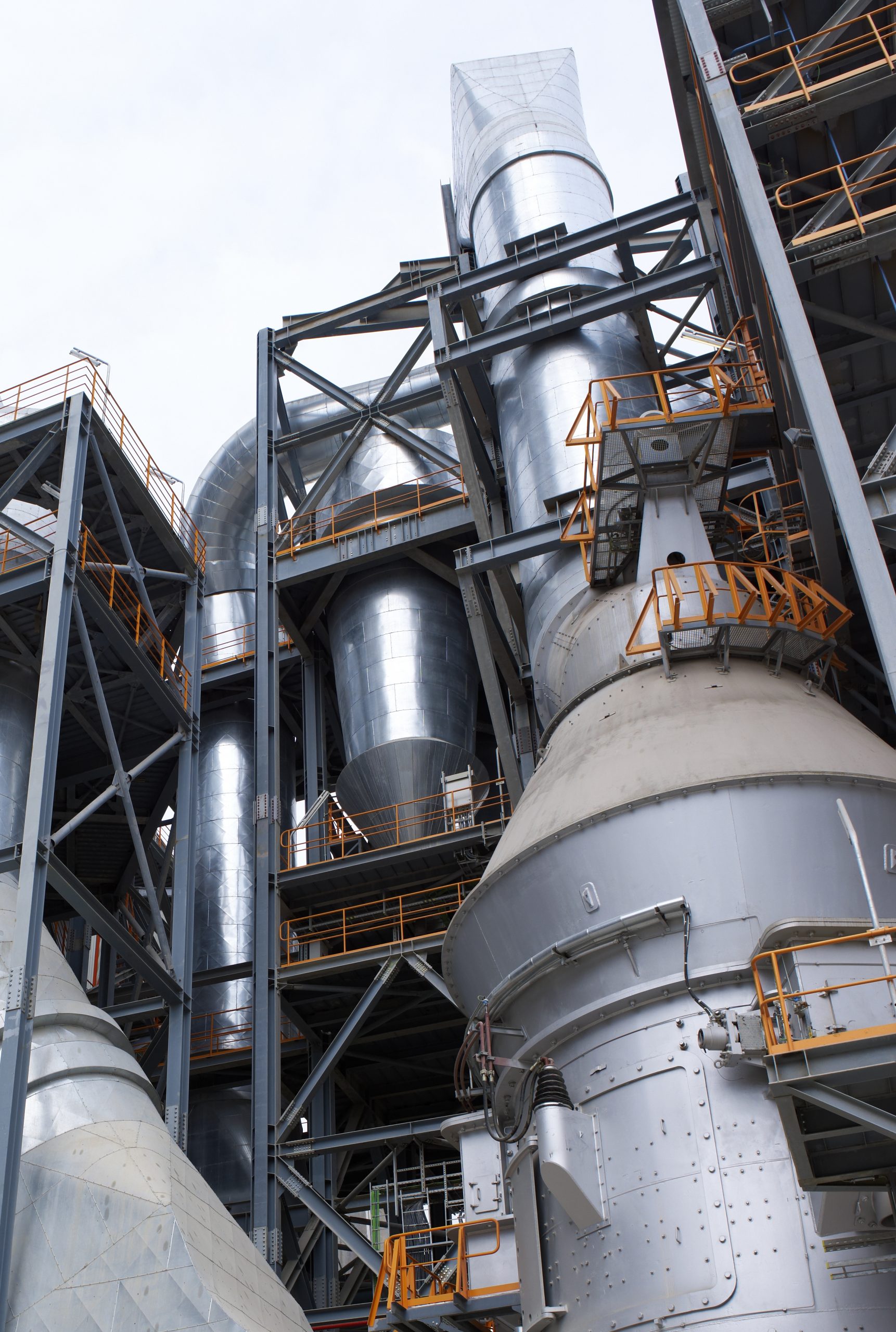
Vertical Roller Mills (VRMs) – Process & Reliability
Grinding Mechanism and Pressure Profile
Understand how the VRM grinding bed and pressure system work together to achieve efficient comminution.
Bed grinding through compression between rollers and table
Influence of roller pressure, table speed, and material layer thickness
How pressure profile affects throughput, vibration, and product fineness
Identifying unstable grinding zones (thin bed, high vibration, coarse product)
Hydraulic Tensioning System
Learn how the hydraulic system maintains grinding pressure and stabilizes the mill.
Accumulators, hydraulic pumps, and control valves
Pressure setting, monitoring, and adjustment
Common hydraulic issues: pressure drops, accumulator failure, oil contamination
Preventive maintenance to ensure stable grinding force and low vibration
Separator Operation and Efficiency
Master the separator’s role in controlling fineness, PSD, and circuit stability.
Rotor speed, cage design, and airflow distribution
Cut size and sharpness of separation
How separator efficiency influences circulating load and mill output
Troubleshooting coarse product, high residue, or unstable fineness
Gas Flow, Temperature Control, and Drying Capacity
Understand the thermal and aerodynamic requirements for stable VRM operation.
Gas flow paths and their influence on material transport
Temperature control for drying raw materials and additives
Balancing gas flow to avoid high vibration or poor separation
Managing gypsum dehydration in cement grinding VRMs
Identifying drying bottlenecks that limit throughput
Wear Parts Inspection and Replacement Planning
Learn how to manage wear to maintain performance and reduce downtime.
Wear patterns on rollers, table segments, and separator internals
Measuring wear to predict replacement intervals
Hardfacing, replacement strategies, and refurbishment options
How excessive wear increases vibration, reduces pressure efficiency, and raises kWh/t
Vibration Control and Process Stability
Develop the skills to diagnose and correct VRM instability.
Root causes: thin bed, feed fluctuations, hydraulic issues, gas flow imbalance
Vibration signatures and early warning indicators
Corrective actions: adjusting pressure, feed rate, gas flow, or separator speed
Maintaining stable operation to protect mechanical components and improve quality
VRM Performance Evaluation and Optimization
Apply proven methods to improve VRM efficiency and reliability.
Key KPIs: pressure profile, vibration levels, gas flow, separator efficiency
Sampling and PSD analysis for optimization
Adjusting operating parameters to reduce kWh/t and increase output
Improving drying capacity and material transport
Case‑based optimization strategies for cement, slag, and raw material VRMs
Maintenance & Operational Excellence
Reliability‑Centered Maintenance (RCM)
Learn how to apply RCM principles to grinding systems to maximize uptime and reduce unexpected failures.
Identify critical components and failure modes
Prioritize maintenance tasks based on risk and impact
Develop structured maintenance plans aligned with equipment behavior
Shift from reactive to reliability‑driven maintenance culture
Condition Monitoring (Vibration, Oil Analysis, Thermography)
Understand how modern diagnostic tools improve reliability and prevent catastrophic failures.
Vibration analysis: detect misalignment, imbalance, bearing wear, and gear defects
Oil analysis: monitor contamination, wear metals, viscosity, and lubrication health
Thermography: identify hotspots, electrical issues, and lubrication failures
Integrate monitoring data into predictive maintenance programs
Preventive vs. Predictive Maintenance Strategies
Learn how to balance scheduled maintenance with data‑driven predictive approaches.
Preventive maintenance: inspections, lubrication, wear part replacement
Predictive maintenance: condition‑based interventions using real‑time data
How predictive strategies reduce downtime and maintenance costs
Choosing the right strategy for ball mills, roller presses, and VRMs
Shutdown Planning and Inspection Routines
Master the planning and execution of effective shutdowns.
Pre‑shutdown preparation and task prioritization
Inspection checklists for grinding equipment
Coordination between mechanical, electrical, and process teams
Post‑shutdown reporting and follow‑up actions
Techniques to minimize shutdown duration and maximize inspection quality
Spare Parts Management and Critical Components
Optimize inventory and ensure availability of essential components.
Identifying critical spares for mills, roller presses, and VRMs
Stock level strategies: minimum, safety, and reorder points
Balancing cost, lead time, and reliability risk
Using failure history to improve spare parts planning
Building a Culture of Continuous Improvement
Develop the mindset and practices that sustain long‑term reliability.
Root cause analysis and corrective action discipline
Daily maintenance routines and operator involvement
Performance tracking through KPIs and dashboards
Encouraging cross‑functional collaboration and knowledge sharing
Embedding continuous improvement into daily operations


“The seminar is designed for operation, process and Maintenance personnel.”
Aims of the seminar
Develop a solid understanding of grinding fundamentals Equip participants with the core principles of crushing, comminution, and size reduction that directly influence mill performance and energy efficiency.
Strengthen knowledge of modern grinding systems Provide a comprehensive understanding of ball mills, roller presses, and vertical roller mills (VRMs), including their mechanisms, operating behavior, and system interactions.
Improve process stability and cement quality control Teach participants how to manage PSD, Blaine, residue, separator efficiency, gas flow, and temperature to achieve consistent, high‑quality cement production.
Enhance diagnostic and optimization skills Enable participants to evaluate grinding circuits using sampling, mass balancing, PSD analysis, and performance indicators to identify bottlenecks and improvement opportunities.
Increase equipment reliability and reduce downtime Introduce best practices in maintenance, lubrication, hydraulic systems, wear management, and reliability‑centered maintenance (RCM) to extend equipment life and prevent failures.
Reduce specific power consumption (kWh/t) Provide practical strategies to optimize grinding efficiency, improve system design, stabilize operation, and reduce energy use across all mill types.
Build operational excellence and continuous improvement culture Encourage structured problem‑solving, proactive monitoring, and cross‑functional collaboration to sustain long‑term performance improvements in grinding operations.

PRELIMINARY PROGRAM
Crushing & Comminution Fundamentals
Morning Session
- Introduction to Comminution in Cement Manufacturing
- Principles of Size Reduction: Impact, Compression, Attrition
- Material Characteristics: Hardness, Abrasion, Moisture
- Crushing Technologies: Jaw, Cone, Hammer, Impact Crushers
- Pre‑Crushing Systems and Their Influence on Grinding Efficiency
Afternoon Session
- Comminution Energy & Efficiency Concepts
- Bond Work Index & Grindability Testing
- Feed Preparation for Ball Mills, Roller Presses, and VRMs
- Case Studies: Common Crushing Bottlenecks
- Workshop: Evaluating Your Plant’s Comminution Performance
Daily Outcome: Participants understand how raw material preparation impacts grinding efficiency and system stability.
Grinding Technology & System Design
Morning Session
- Overview of Grinding Technologies
- Ball Mill, Roller Press, and VRM Grinding Mechanisms
- Open vs. Closed Circuit Grinding
- Separator Types and Efficiency Principles
- Process Flow Design for Modern Grinding Systems
Afternoon Session
- Gas Flow, Ventilation, and Drying Requirements
- Heat Balance Fundamentals
- System Layout for Energy Efficiency
- Case Studies: System Design Failures & Improvements
- Workshop: Designing an Efficient Grinding Circuit
Daily Outcome: Participants learn how system design influences throughput, energy consumption, and cement quality.
Equipment Performance & Cement Quality
Morning Session
- Ball Mill Performance: Output, kWh/t, Media, Liners
- Roller Press Performance: Pressure, Vibration, Surface Wear
- VRM Performance: Table Speed, Pressure Profile, Separator Efficiency
- Key Performance Indicators (KPIs) for Grinding Systems
Afternoon Session
- Cement Quality Fundamentals: Blaine, Residue, PSD
- Separator Efficiency & Its Impact on Quality
- Process Stability and Control Room Best Practices
- Case Studies: Quality Problems Linked to Grinding
- Workshop: Diagnosing Quality Issues in Grinding Systems
Daily Outcome: Participants understand how grinding performance directly affects cement quality and production stability.
Evaluate & Optimize Grinding Systems
Morning Session
- Sampling Techniques & Circuit Evaluation
- Mass Balances & Efficiency Calculations
- Identifying Bottlenecks in Ball Mills, Roller Presses, and VRMs
- Optimization Tools and Diagnostic Methods
Afternoon Session
- Ball Mill Optimization: Media, Diaphragms, Ventilation
- Roller Press Optimization: Hydraulic Pressure, Separator Interaction
- VRM Optimization: Gas Flow, Drying, Vibration Control
- Workshop: Full Circuit Optimization Exercise
Daily Outcome: Participants gain practical tools to evaluate and optimize grinding circuits for higher output and lower energy use.
DAY 5 – Maintenance & Operational Excellence
Morning Session
- Reliability‑Centered Maintenance (RCM) for Grinding Systems
- Preventive vs. Predictive Maintenance
- Condition Monitoring: Vibration, Oil Analysis, Thermography
- Wear Part Management: Liners, Rollers, Table Segments
Afternoon Session
- Shutdown Planning & Inspection Routines
- Spare Parts Strategy & Inventory Optimization
- Building a Culture of Maintenance Excellence
- Group Exercise: Creating a Grinding Reliability Improvement Plan
- Final Q&A and Certification Ceremony
Daily Outcome: Participants leave with a clear reliability and maintenance strategy to reduce downtime and improve long‑term equipment health.
Learn more
Location: Hyderabad, India
Hotel: To Be Determined (final venue will be announced soon)
Registration fee per participant: $3,500 USD. Taxes may apply.
The fee includes all training materials, a certificate, a welcome cocktail, coffee breaks, daily lunches, and a farewell dinner.
Payment will be accepted via Credit Card or Purchase Order.
Note: This does not include the cost of your travel expenses, lodging, or personal expenses.
An invoice will be forwarded to you after receiving your registration for a seminar or training course.
Registration is not considered final until payment is received
The Cement Institute reserves the right to modify course content, reschedule dates, or cancel/postpone seminars and training programs due to low enrollment, strikes, acts of terrorism, severe weather conditions, or any other circumstances beyond the control of The Cement Institute, LLC. In the event of a cancellation, all registered participants will be notified directly at the email address provided during registration. If The Cement Institute cancels the event, participants will receive a 100% refund, issued to the same payment method used at the time of registration.
The Cement Institute, LLC is not responsible for any additional costs, damages, or expenses incurred by participants as a result of a postponed or canceled event. Training fees do not include travel expenses, hotel accommodations, or travel insurance.
Tel: +1 917 937 8067
Email: training@thecementinstitute.com